
Implant information can go missing.
And verifying devices isn't always possible. This can lead to doubts and questions like:

These are
real questions,
from real women.
And that's why we
created:
RFID Technology with Qid®
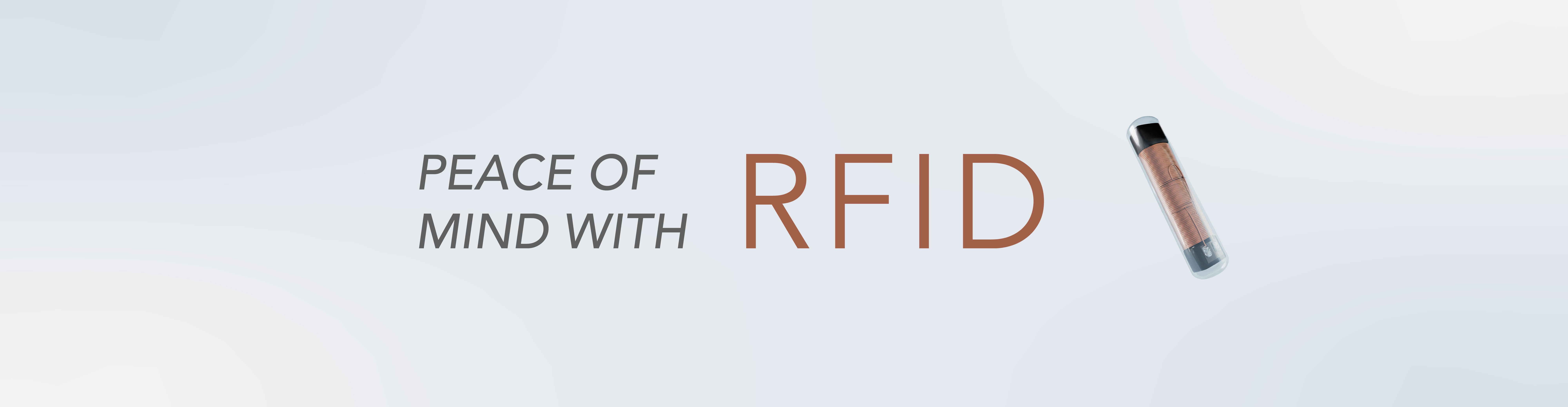
Peace of Mind with RFID
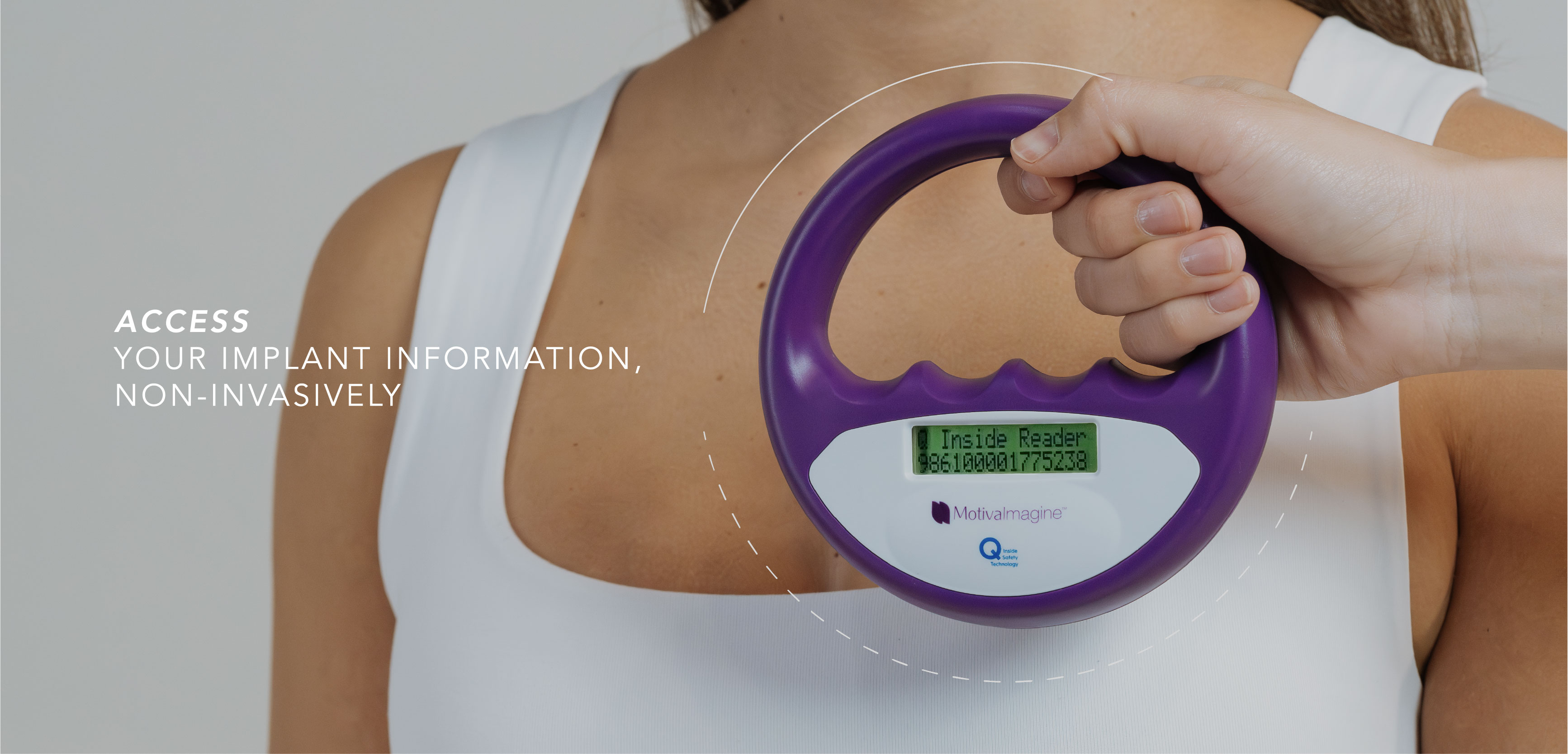
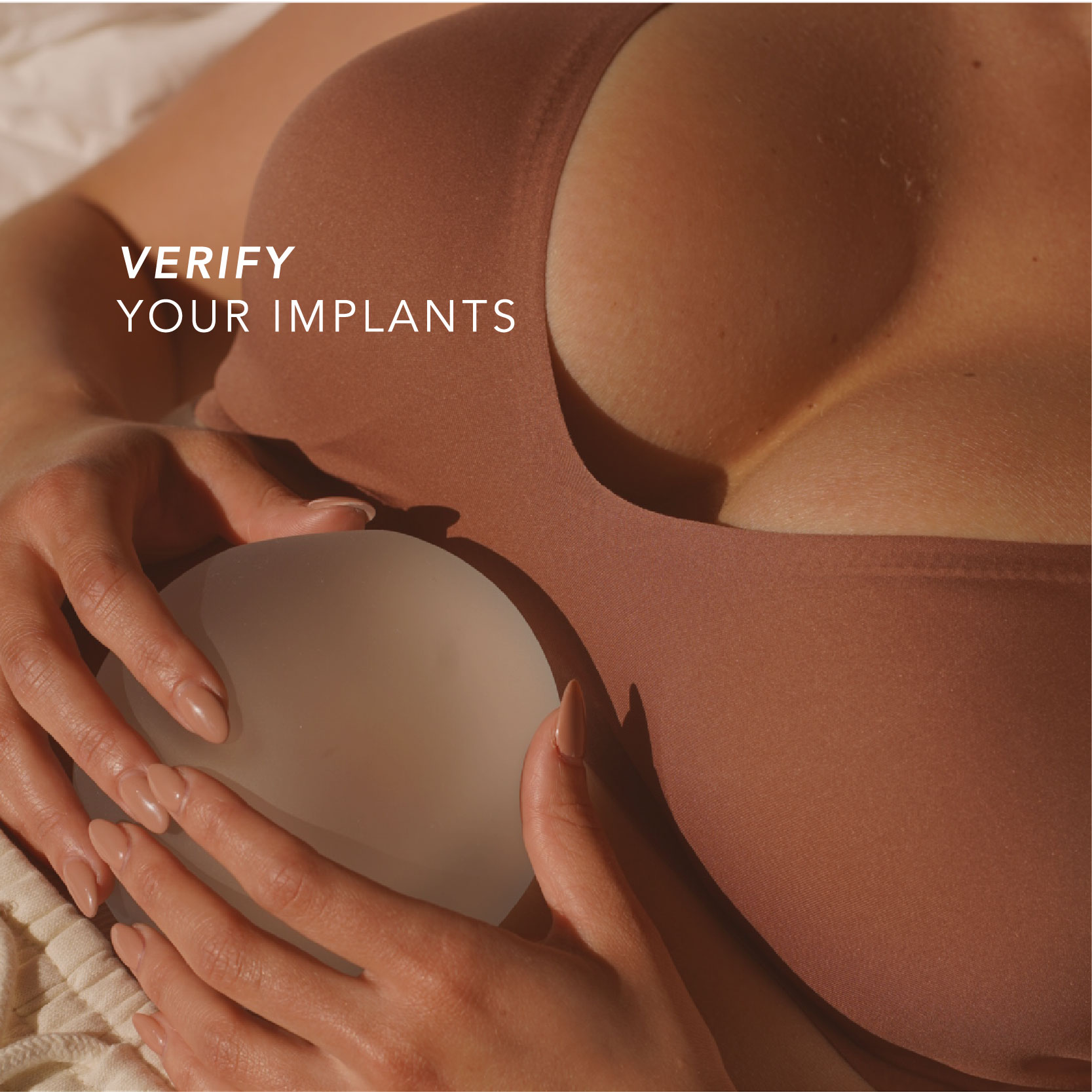
Motiva® breast implants incorporate an optional radiofrequency identification device (RFID) technology, a small component embedded within the cohesive gel that enables non-invasive access to implant-specific information after surgical implantation. Additionally, it allows for non-invasive verification of implanted devices, allowing patients to check for counterfeits or distinct devices than the ones agreed upon for implantation.
This technology has been available around the world since 2014 and more than 2.5 million Motiva Implants® with Motiva®’s first-generation RFID technology have been placed in the market providing women peace of mind. To date there have been no reports of these devices leading to a clinical misdiagnosis or a inadequate assessment of implant integrity.
Depending on your country, Motiva Implants® are optionally available with Qid® or Zen®, allowing patients and surgeons to access key information and device verification.1-3
Why we invented RFID in Breast Implants?

RFID devices such as Qid® only provide the implant’s unique Electronic Serial Number (ESN). Once the ESN is entered into the motiva.health database, an authorized surgeon can retrieve specific implant information, including surface type, style, size, manufacturing date, and procedure information.1-3
Qid® uses passive RFID technology, meaning they do not contain a battery.
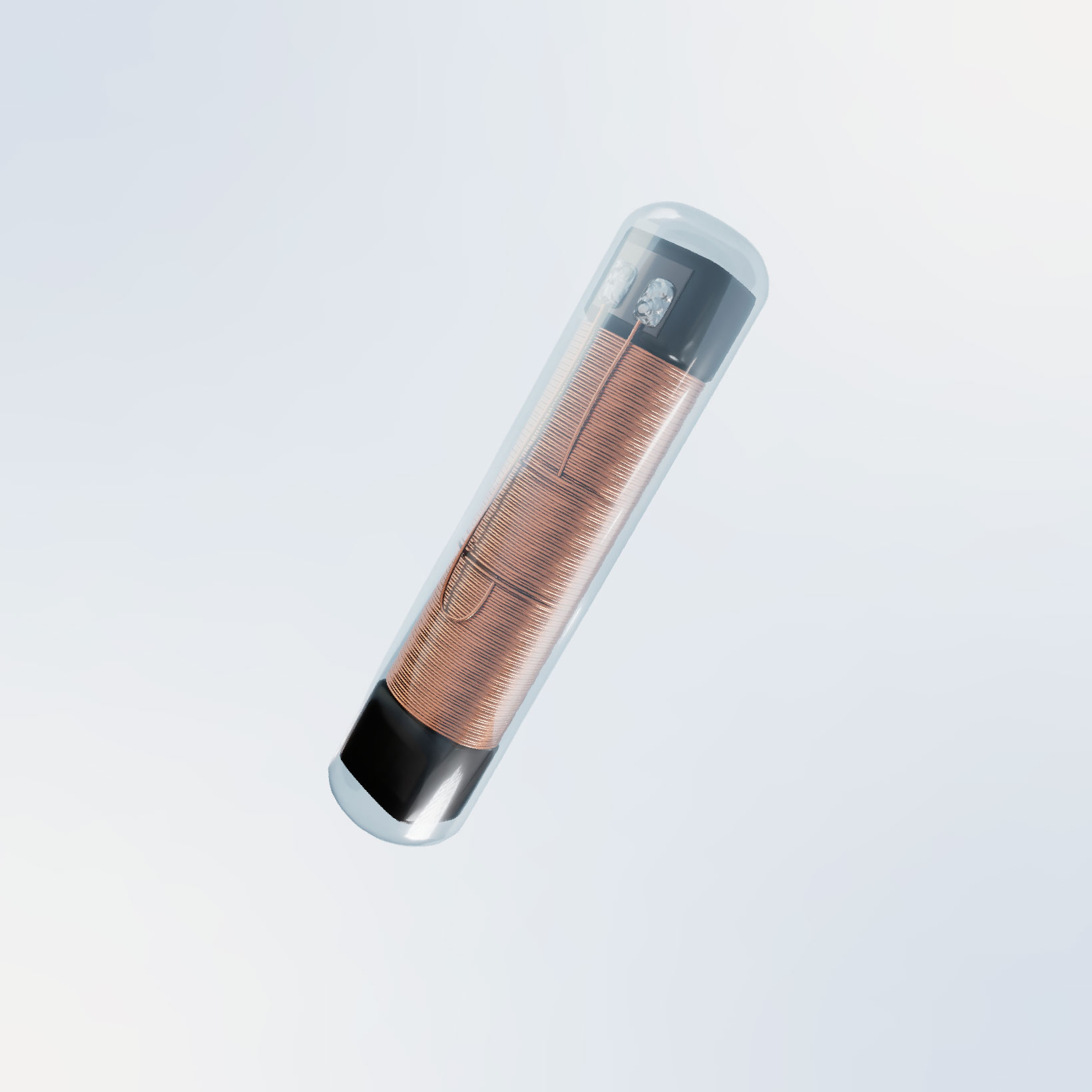
Instead, their functionality relies on the connection to the Motiva® Reader - a proprietary handheld radiofrequency reader. When the reader is brought near the implant, it emits power that activates the component’s integrated circuit. This circuit then transmits a unique electronic serial number (ESN) via radio waves. Qid® transmits a 15-digit ESN.
Each ESN is unique to each individual implant and can be securely entered by a certified Motiva® surgeon into the motiva.health professional database to retrieve implant information.1-3
Women have become increasingly aware of the importance of knowing and verifying accurate information about their breast implants. Particularly in the unfortunate event of a device recall or due to the emergence of breast implant related proliferative diseases, such as breast implant-associated anaplastic large-cell lymphoma (BIA-ALCL)4 and the occurrence of manufacturer safety events.
Implant recalls in the past from other companies have led some women to choose prophylactic explantation (preventative implant removal), even in the absence of adverse symptoms5 or device-related complications, through anxiety alone.6 The ability to easily access implant information has proven difficult for many women due to a lack of reliable breast implant registries, loss of medical records, loss of patient device cards, surgeon relocation and a significant increase in cosmetic tourism.7,8 Further, many women state they have never received their implant information post-surgery.9
Qid® enables women and healthcare professionals to access non-invasively and verify breast implant details quickly from any* geographical location, thus overcoming previous challenges with implant traceability and potentially avoiding unnecessary surgical procedures. Moreover, verifying the previously implanted device prior to revision surgery can enhance the surgeon’s preoperative planning by ensuring full awareness of key implant characteristics, including surface type, volume, and shape. This information may also assist in planning capsule management by identifying the implant surface. The Food and Drug Administration (FDA) has further acknowledged the importance of radiologists being aware of the breast implant fill material(s), number of lumens, manufacturer, and model to support accurate interpretation and diagnosis during imaging surveillance.10,11 With Qid®, this information can be easily accessed and verified.12
*Any geographical region with the availability of a Motiva® handheld reader and access to the motiva.health database.
Qid® responds only when stimulated by the specific radiofrequency signal emitted by the handheld Motiva® Reader,13 and DO NOT enable location tracking or allow remote monitoring, in contrast to “tracking” devices which continuously emit signals.
The only information transmitted from Qid® to the Motiva® Reader is the breast implants' unique (ESN), which is accessible only by certified healthcare professionals when the Motiva® Reader is placed near the implant. Entering the ESN into the motiva.health database, allows access to specific implant information, including surface type, projection, base, volume, and manufacturing date.
Motiva Implants® with Qid®
Launched in 2014, Qid® is an optional RFID component that is embedded within the gel of your Motiva® breast implants.* It allows you and your surgeon, after surgery, to easily access information about your Motiva® implants. Furthermore, implants with microtransponders, like Qid®, allow patients and health-care practitioners to check for counterfeits or devices different to the ones agreed upon for implantation, through non-invasive verification of the exact device information including brand, model, size, serial number, and manufacturing date.1,2
*Qid® is an optional component and is not included in the entire Motiva® implants portfolio.
Qid® enables women and healthcare professionals to access non-invasively and verify breast implant details quickly from any* geographical location, thus overcoming previous challenges with implant traceability and potentially avoiding unnecessary surgical procedures.
The ability to easily access and verify implant information has proven difficult for many women due to a lack of reliable breast implant registries, loss of medical records, loss of patient device cards, surgeon relocation and a significant increase in cosmetic tourism.7,8 Further, many women state they have never received their implant information post-surgery.9
Additionally, implants with microtransponders such as Qid® allow patients and healthcare practitioners to to check for counterfeits or devices different to the ones agreed upon for implantation, through non-invasive verification of the exact device information including brand, model, size, serial number and manufacturing date.
Moreover, verifying the previously implanted device prior to revision surgery can enhance the surgeon’s preoperative planning by ensuring full awareness of key implant characteristics, including surface type, volume, and shape. This information may also assist in planning capsule management by identifying the implant surface. The Food and Drug Administration (FDA) has further acknowledged the importance of radiologists being aware of the breast implant fill material(s), number of lumens, manufacturer, and model to support accurate interpretation and diagnosis during imaging surveillance.10,11 With Qid®, this information can be easily accessed.12
*Any geographical region with the availability of a Motiva® handheld reader and access to the motiva.health database.
Qid® utilizes passive RFID technology, meaning it does not contain a battery.
Instead, its functionality relies on the connection to the Motiva® Reader - a proprietary handheld radiofrequency reader. When the reader is brought near the implant, it emits power that activates the component’s integrated circuit. This circuit then transmits a unique electronic serial number (ESN) via radio waves. Qid® transmits a 15-digit ESN.
Each ESN is unique to the individual implant and can be securely entered by a certified Motiva® surgeon into the motiva.health professional database to retrieve implant information.1-3
Qid® provides the external handheld reader only with the implant’s unique ESN (15-digits). Once the ESN is entered into the motiva.health database, an authorized surgeon can retrieve specific implant information, including surface type, style, size, manufacturing date, and procedure information.1,2
Growing awareness of breast implant–associated conditions (particularly breast implant–associated anaplastic large-cell lymphoma) has highlighted the importance of patients knowing and verifying the specific type and characteristics of their breast implants. Certain implant features have been associated with differing levels of risk, making accurate implant identification important for appropriate monitoring and clinical decision-making.14-16
Reliable implant information is also important in the context of manufacturer safety notifications, regulatory updates, or device recalls.17 In these situations, patients and clinicians rely on accurate implant identification to guide decisions related to surveillance, continued implantation, or explantation.
Previous implant-related safety events have shown that concern may arise even in the absence of symptoms or confirmed device-related complications. In some cases, anxiety and uncertainty, rather than clinical indication, have led patients to choose prophylactic explantation (preventive implant removal).18 Access to accurate, verifiable implant information after surgery (as with Qid®) can help support informed discussions and reduce uncertainty when decisions are being made.
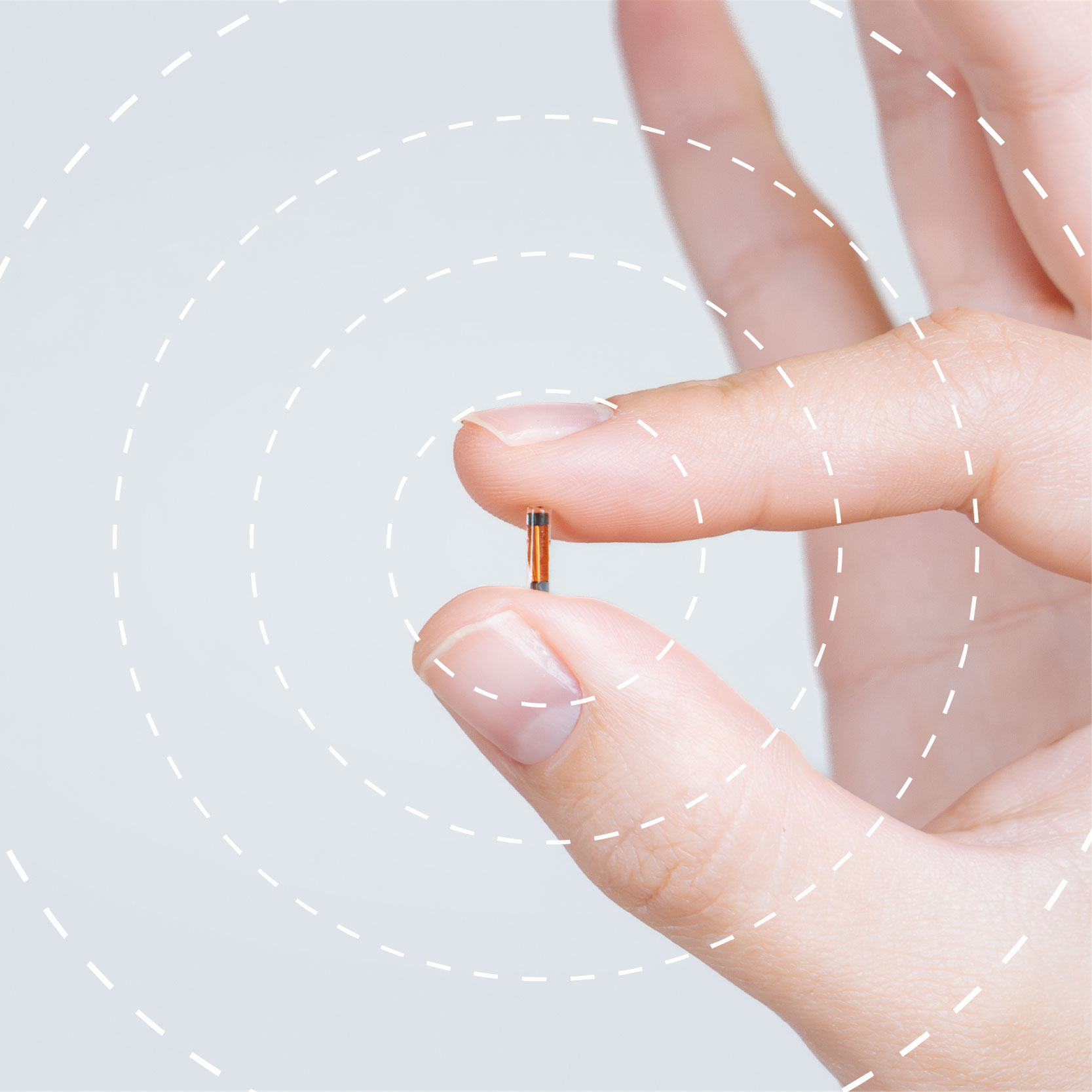
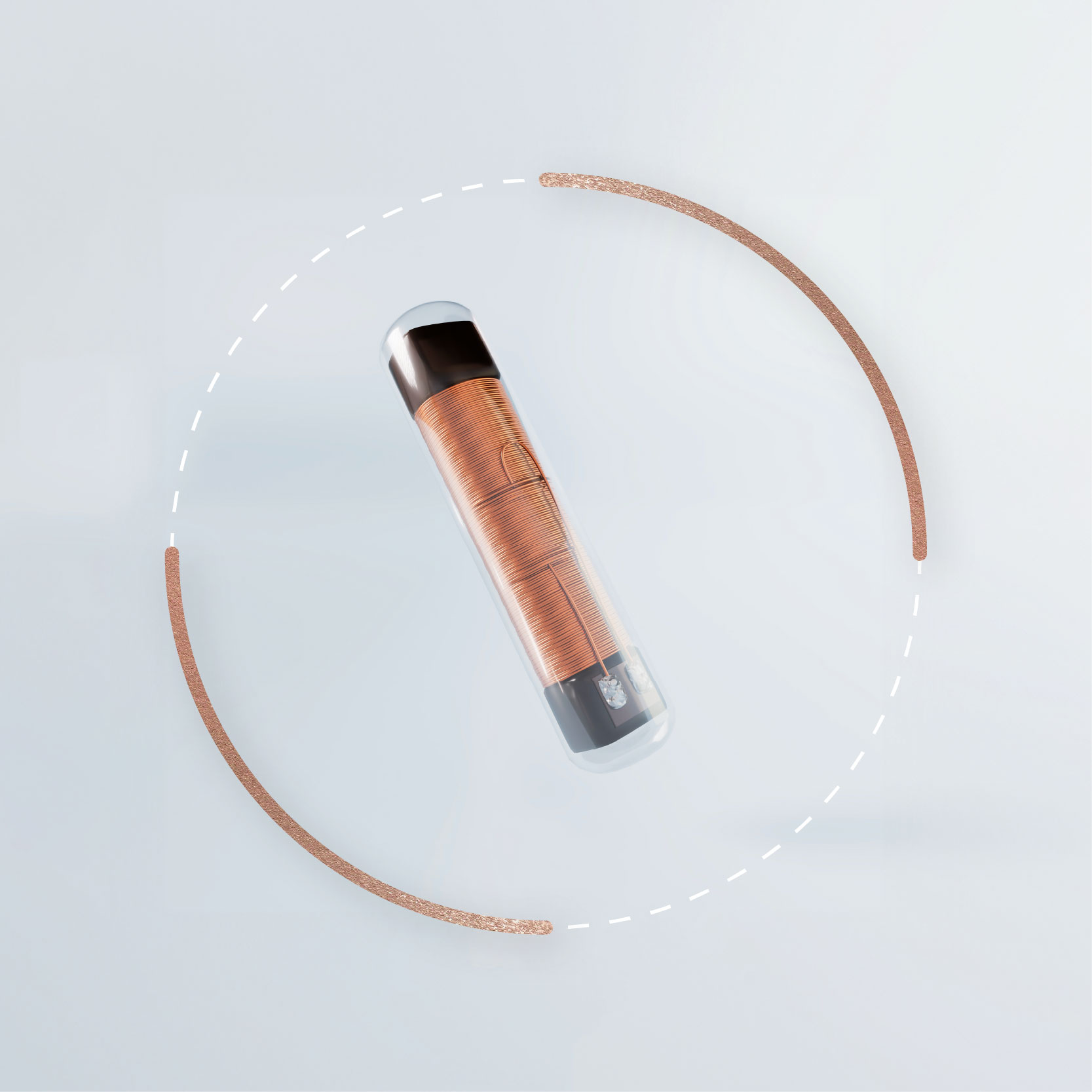
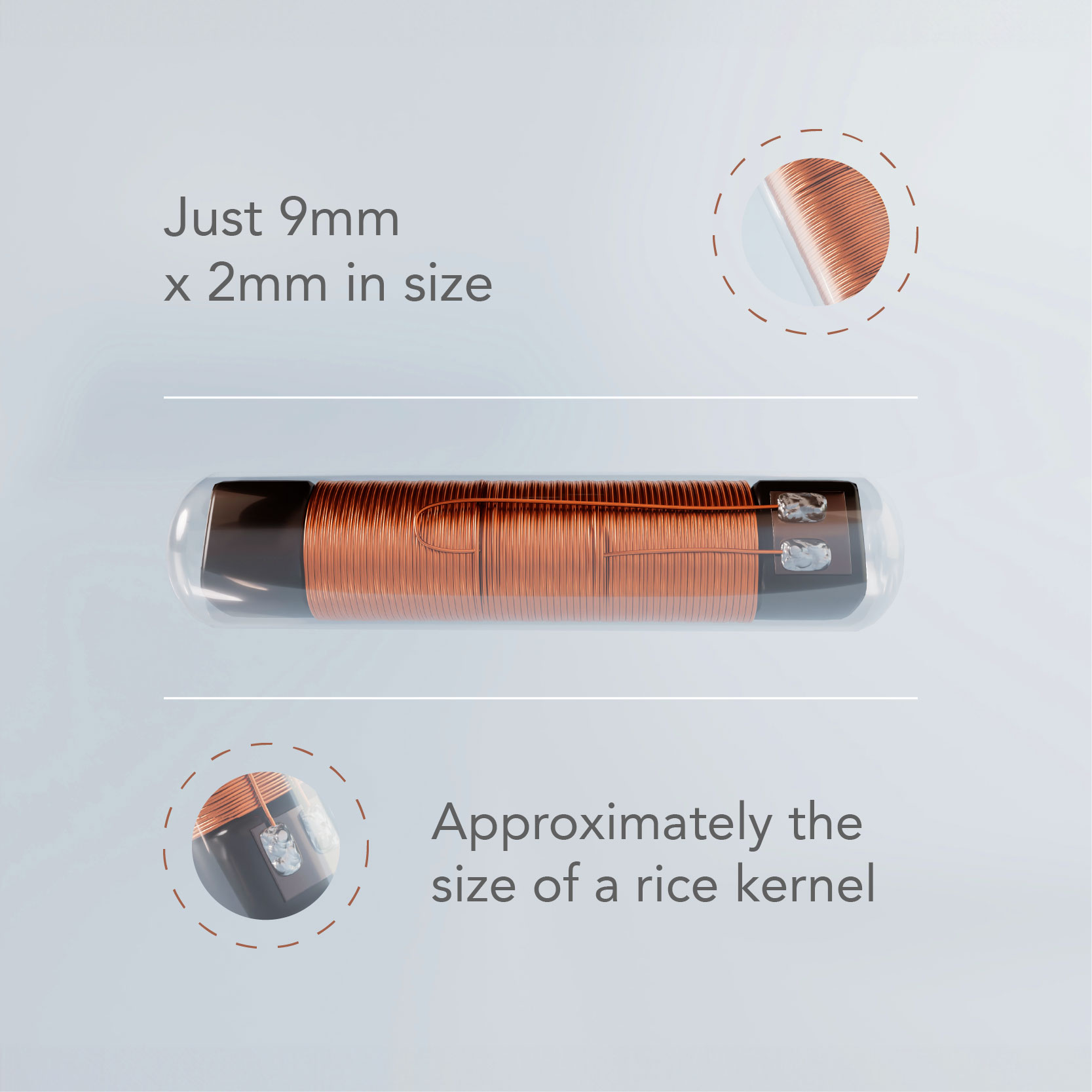
Measuring 9mm x 2mm, aproximately the size of a rice kernel, Qid® consists of an integrated circuit and a receiving/transmitting antenna tightly wrapped around a nickel-zinc ferrite core, encapsulated in biocompatible glass.
The safety of Qid® has been thoroughly tested following International Organization of Standardization19 (ISO) 10993-1, FDA Guidance20, and tested by North American Science Associate (NAMSA) to ensure it meets all safety standards.21 These safety standards include the biological evaluation, chemical characterization, and toxicological assessment of Motiva Implants® with the optional microtransponder.22
Qid® is embedded within the highly-cohesive silicone gel,23 on the posterior aspect of the implant. Post-market surveillance data has shown no reported cases of RFID migration into the surrounding breast tissue.24
In the event of an implant rupture, a complete chemical characterization and biocompatibility assessment of Qid® have been conducted, followed by a subsequent toxicological evaluation, and the results demonstrated that the Qid® is non-cytotoxic and safe for clinical use.21
Women with Motiva Implants® featuring Qid® can safely undergo the following breast imaging modalities: 25-27
- Mammography,
- Computerized tomography (CT),
- X-ray,
- Ultrasound,
- MRI, under specific conditions.
All patients with Motiva Implants® can safely undergo Magnetic Resonance (MR) scanning. Potential image distortions caused by a Qid® microtransponder can be effectively managed using existing MRI guidelines or alternative imaging types.
Motiva Implants® with RFID are labeled MR Conditional, meaning that patients with this RFID technology can safely undergo MRI under specific conditions*:2
- Static magnetic field of 1.5-Tesla and 3-Tesla only
- Maximum Spatial Gradient Magnetic Field: Up to 4,000-gauss/cm (40-T/m), extrapolated.
- Specific Absorption Rate (SAR): Whole-body averaged SAR of 2 W/kg for: 15 minutes of scanning (i.e., per pulse sequence), or 60 minutes of continuous scanning (i.e., per pulse sequence or back-to-back sequences/series without breaks) in the Normal Operating Mode.
*Refer to the Directions of Use for complete MRI guidance.
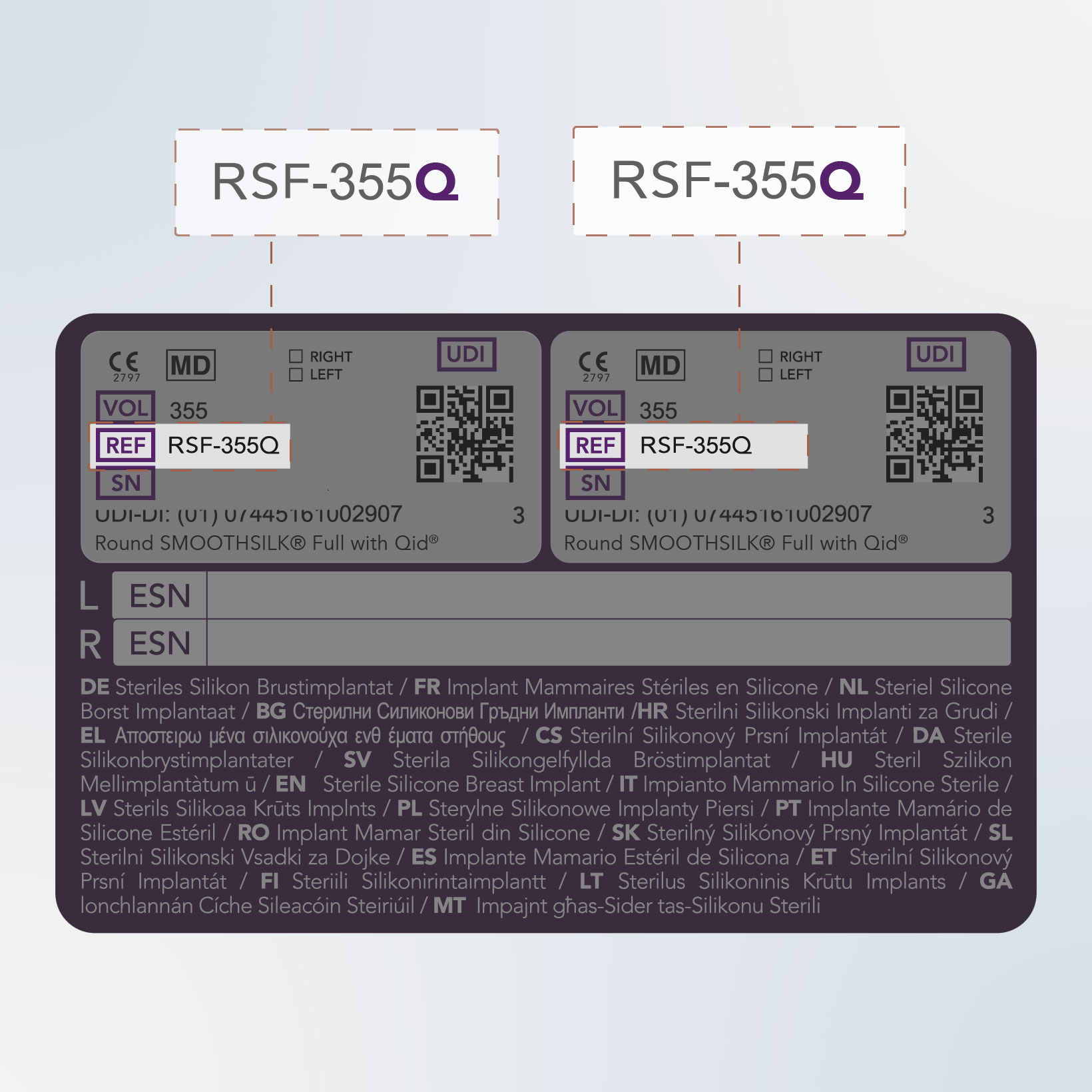
You can check whether your Motiva® implants include RFID technology such as with Qid® by looking at the catalogue or reference number on your Motiva® Implant Card.
- If the number ends with the letter “Q”, your implants include Qid®.
- If there are no letters present, it means that RFID technology is not included in your breast implants.
No, Qid® is a passive device with no battery. Qid® responds a signal only when activated by the specific radio frequency of the Motiva® Reader, in contrast to “tracking” devices that continuously emit signals.13
The only information transmitted from the Qid® to the Motiva® Reader is the 15-digit electronic serial number (ESN), which is accessible only by certified healthcare professionals when the Motiva® Reader is placed near the implant. Entering the ESN into the motiva.health database, allows access to specific implant information, including surface type, projection, base, volume, and manufacturing date.
How Do I Verify My Motiva® Implants?
Watch the video to learn how to verify your Motiva® implants and secure your warranty.
How To Verify If My Motiva Implants® Have Qid®?
You can check whether your Motiva® implants include RFID technology such as Qid® by looking at the catalogue or reference number on your Motiva® Implant Card (as seen in the image).
- If the number ends with the letter “Q”, your implants include Qid®.
- If there are no letters present, it means that RFID technology is not included in your breast implants.
References
- Establishment Labs. DDD-001: Device Description Document for Sterile Silicone Breast Implants Motiva® implants Round SmoothSilk®/SilkSurface® Plus. Data on file.
- Establishment Labs, DDD-002: Device Description Document for Sterile Silicone Breast Implants Motiva® implants Ergonomix® Round SmoothSilk®/SilkSurface®. Data on File
- Establishment Labs. DDD-006: Device Description Document for Motiva Implants Ergonomix2. Data on file.
- U.S. Food and Drug Administration. Medical Device Reports of Breast Implant-Associated Anaplastic Large Cell Lymphoma. Published February 6, 2025. Accessed January 14, 2026.
- PIP Breast Implants Situation Update. Agence nationale de sécurité de medicament et des produit de santé report. April 2013. Pg.15. http//:ansm.sante.fr/content/download/…/Update-PIP-UKjune2013.pd
- Scientific Committee on Emerging and Newly Identified Health Risks (SCENIHR). The safety of breast implants. European Commission. Published February 2015. Accessed January 12, 2026. https://ec.europa.eu/health/scientific_committees/emerging/docs/scenihr_o_043.pdf
- Sang Eun Nam, Bum Sik Bang, Eun Kyoung Lee, et al. Use of High-Resolution Ultrasound in Characterizing a Breast Implant and Detecting a Rupture of the Device. Plastic and reconstructive surgery/PSEF CD journals. 2023;152(1):39-43. doi:https://doi.org/10.1097/prs.0000000000010201
- Fabio, Panagiotakos D, Firmani G, Michail Sorotos. BIA-ALCL Epidemiological Findings From a Retrospective Study of 248 Cases Extracted From Relevant Case Reports and Series: A Systematic Review. Aesthetic Surgery Journal. 2022;43(5):545-555.doi:https://doi.org/10.1093/asj/sjac312
- Glicksman C. et al. The Aesthetic One App Revolutionizes Implant Registration and Creates the Connected Patient, Aesthetic Surgery Journal, Volume 42, Issue 7, July 2022, Pages NP447–NP450, https://doi.org/10.1093/asj/sjac073
- Nelson MT, Meisamy S. High Risk Breast Cancer Patient with Silicone Breast Implant and Q Inside SafetyTM Micro Transponder. Open journal of medical imaging. 2019;09(04):52-57. doi:https://doi.org/10.4236/ojmi.2019.94005
- Munhoz AM, Chala L, de Melo G, Marques AA, Tucunduva T, Gemperli R. Usefulness of radiofrequency identification device in diagnosing rotation of Motiva SmoothSilk implants after augmentation mammoplasty. Plast Reconstr Surg Glob Open 2019;7:e2497; doi:10.1097/GOX.0000000000002497
- Huong T Le-Petross, MD, FRCPC and others, Assessment, Complications, and Surveillance of Breast Implants: Making Sense of 2022 FDA Breast Implant Guidance, Journal of Breast Imaging, Volume 5, Issue 3, May/June 2023, Pages 360–372,https://doi.org/10.1093/jbi/wbad029
- Nelson MT, Brattain KA, Williams JM. Does Electronic Identification Enablement for Silicone Gel Implants Impact Patient Safety? J Surg OpenAccess. 2018;4(1). doi: 10.16966/2470-0991.162
- U.S. Food and Drug Administration. Questions and answers about breast implant-associated anaplastic large cell lymphoma (BIA-ALCL). Updated [insert date if available]. Accessed January 12, 2026. https://www.fda.gov/medical-devices/breast-implants/questions-and-answers-about-breast-implant-associated-anaplastic-large-cell-lymphoma-bia-alcl
- Santanelli di Pompeo F, Clemens MW, Paolini G, Firmani G, Panagiotakos D, Sorotos M. Epidemiology of breast implant–associated anaplastic large cell lymphoma in the United States: a systematic review. Aesthet Surg J. 2024;44(1):NP32‑NP40. doi:10.1093/asj/sjad279
- Clemens MW, Myckatyn TM, Di Napoli A, Feldman AL, Jaffe ES, Haymaker CL, Horwitz SM, Hunt KK, Kadin ME, McCarthy CM, Miranda RN, Prince HM, Santanelli di Pompeo F, Holmes SD, Phillips LG; American Association of Plastic Surgeons Consensus Panel. American Association of Plastic Surgeons consensus on breast implant–associated anaplastic large-cell lymphoma. Plast Reconstr Surg. 2024;154(3):473‑483.doi:10.1097/PRS.0000000000011370
- Ho AL, Brown MH, Lennox PA. Breast implant–associated anaplastic large cell lymphoma: a Canadian perspective. Can J Surg. 2023;66(1):E1‑E6. doi:10.1503/cjs.007123
- Scientific Committee on Emerging and Newly Identified Health Risks (SCENIHR). The safety of breast implants. European Commission. Published February 2015. Accessed January 12, 2026. https://ec.europa.eu/health/scientific_committees/emerging/docs/scenihr_o_043.pdf
- International Organization for Standardization. ISO 10993-1:2018: Biological evaluation of medical devices — Part 1: Evaluation and testing within a risk management process. Published August 2018. Accessed October 22, 2025. https://www.iso.org/standard/68936.html
- U.S. Food and Drug Administration. Use of International Standard ISO 10993-1, "Biological evaluation of medical devices – Part 1: Evaluation and testing within a risk management process." Guidance for Industry and Food and Drug Administration Staff. Published September 8, 2023. Accessed October 22, 2025. https://www.fda.gov/regulatory-information/search-fda-guidance-documents/use-international-standard-iso-10993-1-biological-evaluation-medic al-devices-part-1-evaluation-and
- Establishment Labs. BER-001002: Biological Evaluation Report (BER) for Microtransponder. Data on file.
- International Organization for Standardization. ISO/TS 21726:2019: Biological evaluation of medical devices — Application of the threshold of toxicological concern (TTC) for assessing biocompatibility of medical device constituents. Published February 2019. Accessed October 22, 2025. https://www.iso.org/standard/71514.html
- Aitzetmuller-Kleitz ML, Yang S, Wiebinghaus P, Wellenbrock S, Ozturk M, Kuckelhaus M et al. Complication rates after breast surgery with the Motiva Smooth SilkSurface silicone gel implants - A systematic review and meta-analysis. Clin. Med. 2023, 12,1881. doi: 10.3390/jcm12051881
- Establishment Labs®, Post-Market Surveillance Results 15-Year Report.
- Establishment Labs. TS-001146: Safety and Performance of the Motiva Implants® with microtransponder (DRW-001053) exposed to Magnetic Resonance Environment. Data on file.
- Meisamy S, Nelson MT. The Effects of Q Inside Safety Technology Micro Transponder on Routine Breast Implant Imaging. Open Journal of Medical Imaging. 2019;09(02):19-31. doi:https://doi.org/10.4236/ojmi.2019.92002
- Establishment Labs. TS-001298: Technical Study Report Artifact assessment when comparing Ferrite Microtransponder (Qid®) vs Non-Ferrite Microtransponder (Zen®) when submitting the samples to various medical imaging modalities. Data on file.
Disclaimer
The information provided is solely for informational purposes. The manufacturer affirms that the use of this technology complies with current regulatory and safety standards. All the details related to the RFID, including specified conditions of use for MRI environment, can be found in the Directions for Use document attached to your Motiva product and our Information for the Patient document. The information presented herein does not constitute medical advice and should not replace consultation with qualified healthcare professionals.